How to Improve HVAC Efficiency in Commercial Buildings
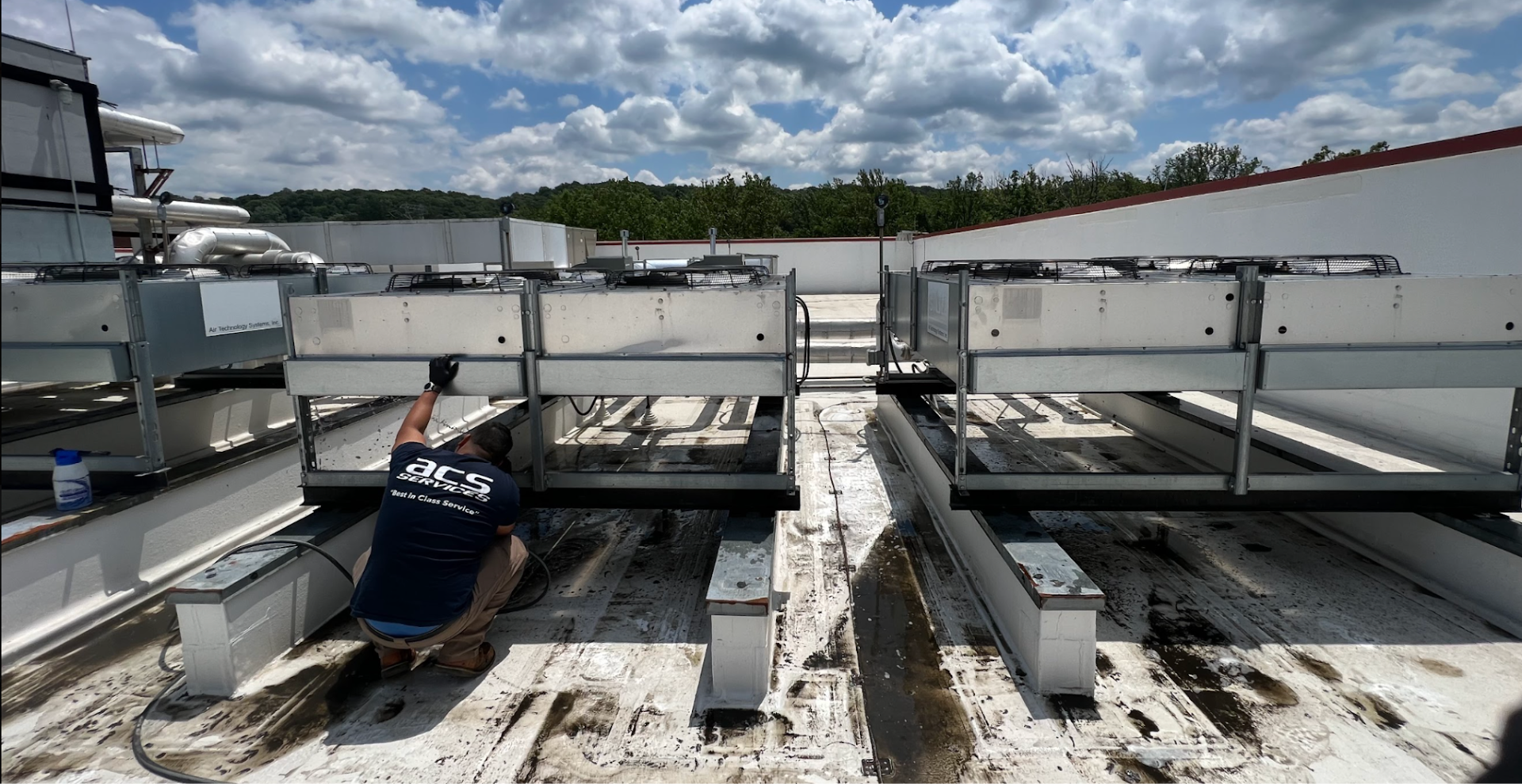
Your commercial HVAC system is likely one of the largest line items on your utility bill, and it's also one of the easiest to overlook until something breaks. Small inefficiencies add up fast across a building of any real size, quietly draining budget month after month.
Thankfully, most efficiency problems are fixable, and many don't require a full system replacement to solve.
Why Does HVAC Efficiency Slip Over Time?
Every mechanical system loses some performance as it ages, but commercial HVAC equipment in large buildings tends to decline faster than owners expect. Dust accumulation, worn belts, refrigerant leaks, and outdated controls all chip away at how well your system does its job.
The tricky part is that this decline is gradual. Your building might still feel comfortable even as the system behind the scenes works twice as hard to maintain that comfort, burning more energy in the process.
What Are the Biggest Drivers of Wasted Energy?
Airflow restrictions are one of the most common culprits. A clogged filter or blocked duct forces your system to push harder to move the same amount of air, and that extra strain shows up directly on your energy bill.
Outdated Thermostats and Controls
Manual or aging thermostats often keep a building conditioned around the clock, even during hours when it's empty. Programmable and smart controls let you match your HVAC output to actual occupancy, which can meaningfully cut energy use without any change to your equipment.
Leaky Ductwork
Ducts that have gaps or poor seals lose conditioned air before it ever reaches the space it's meant for. That lost air has to be made up somewhere, and your system compensates by running longer than it should.
How Often Should Commercial HVAC Systems Be Serviced?
Most commercial systems benefit from professional HVAC inspection at least twice a year, once before the cooling season and once before the heating season ramps up. This timing catches seasonal wear before it turns into a mid-season failure.
What a Good Inspection Actually Covers
A thorough service visit checks refrigerant levels, inspects electrical connections, tests airflow, and cleans components that collect dust and debris over time. Skipping any one of these steps can leave an efficiency problem undetected for months.
Buildings with heavier usage, like those running critical operations around the clock, often need more frequent attention. Matching your service schedule to your building's actual demands, rather than a generic calendar, keeps small issues from compounding.
Are Upgrades Worth the Investment?
Not every efficiency gain requires new equipment, but some upgrades pay for themselves faster than owners expect. Variable frequency drives, for example, let motors run at the speed actually needed rather than full power at all times, cutting energy use during periods of lower demand.
Building automation systems take this further by coordinating HVAC, lighting, and other systems together, so your building responds intelligently to changing conditions instead of running on fixed schedules. For larger commercial properties, this kind of coordination often produces the most noticeable savings.
Even simple upgrades, like sealing ductwork or replacing an aging thermostat, can deliver a fast return without the cost of a major overhaul. The right approach depends on your building's age, usage patterns, and current equipment condition.
How to Prioritize Upgrades
It also helps to think about upgrades in terms of priority rather than tackling everything at once. Addressing the biggest sources of waste first, whether that's a leaking duct system or an outdated thermostat, tends to produce noticeable savings quickly, which makes it easier to justify additional investment down the line.
How Does Building Age Affect Your Efficiency Options?
An older building doesn't rule out meaningful efficiency gains, but it does change where those gains are easiest to find. Aging ductwork, outdated insulation, and legacy equipment all interact with your HVAC system in ways a newer building won't experience.
Retrofitting Instead of Replacing
Full system replacement isn't always necessary to see real improvement. Retrofitting existing equipment with updated components, such as new controls or variable speed motors, often delivers a strong efficiency boost without the cost and disruption of tearing out an entire system.
Working With What the Building Allows
Some older commercial spaces have physical constraints, like limited duct space or unusual layouts, that affect which upgrades make sense. A knowledgeable technician can assess these constraints upfront so you're not investing in equipment that the building can't fully support.
Making Efficiency a Habit, Not a One-Time Fix
When understanding how to improve HVAC efficiency, it isn't a single project you complete and forget. It's an ongoing relationship between your equipment, your maintenance schedule, and how your building actually gets used day to day.
ACS Services helps commercial property owners keep their HVAC systems running efficiently year-round, with documentation and reporting that shows exactly what was done and why it matters. If your building's energy bills have been creeping up without an obvious explanation, reach out to the team to schedule an inspection and find out where the savings are hiding.
FAQs: Commercial HVAC Efficiency
How Much Can Efficiency Upgrades Actually Save?
Savings vary by building, but even modest upgrades like sealing ductwork or adding programmable controls often reduce HVAC energy use by ten to twenty percent. Larger investments, such as variable frequency drives, can push that figure higher depending on how the building operates.
Does a Newer System Automatically Mean Better Efficiency?
Not necessarily. A newer system that's poorly maintained or improperly sized for the building can perform worse than an older system that's been well cared for. Efficiency depends as much on upkeep and proper operation as it does on equipment age.
How Long Does an Efficiency Upgrade Take to Pay for Itself?
Simple upgrades like thermostat replacement or duct sealing often pay for themselves within a year or two through lower energy bills. Larger projects, such as automation system installs, typically have a longer payback period but continue generating savings well beyond that point.