Commercial Welding and Its Business Benefits Explained
When your facility needs structural repairs, custom fabrication, or specialized metalwork, the quality of the welding matters in many ways. For businesses operating in commercial spaces, the difference between a quick fix and a professional weld can mean the difference between a lasting solution and a recurring problem.
Whether you're maintaining existing equipment or building something new, the right welding partner brings expertise that protects your investment and keeps your business moving forward.
What Is Commercial Welding?
Commercial welding is an umbrella term for any specialized metal-joining services performed for businesses. These services cover a wide range of applications, from structural steel work in new construction to repairs on industrial equipment, custom fabrication of metal components, and modifications to existing systems.
Unlike residential welding, which often involves smaller projects like railings or garden gates, commercial welding deals with the demands of business operations. The work must meet strict safety codes, support heavy loads, withstand demanding environments, and often comply with industry-specific regulations.
The Types of Welding Used in Commercial Settings
Several welding methods are commonly used in commercial work, each suited to different materials and applications. MIG welding offers speed and versatility for steel and aluminum projects. TIG welding produces clean, precise welds on thinner materials and stainless steel. Stick welding handles thick materials and works well in outdoor or rugged conditions.
The right method depends on the metals being joined, the thickness of the material, the environment where the work is performed, and the strength requirements of the finished weld. A skilled welder selects the approach that delivers the best result for your specific project.
Why Do Businesses Need Commercial Welding Services?
Businesses across many industries rely on welding for both routine maintenance and major projects.
Manufacturing facilities need welding to repair production equipment and fabricate custom parts. Warehouses use welding services for racking systems, dock equipment, and material handling structures. Office buildings, retail spaces, and institutional facilities all have welded components that require occasional attention.
When something breaks or wears out, having access to a reliable welding professional means you can address the issue quickly without replacing entire systems. A good weld can extend the life of a costly piece of equipment for years, saving you the expense of buying new.
Custom Fabrication for Unique Needs
Many businesses face challenges that off-the-shelf products can't solve. Maybe you need a custom bracket to mount specialized equipment, a reinforcement to support an unusual load, or a modification to existing machinery to fit your workflow. Commercial welding makes these custom solutions possible.
A skilled fabricator can take your concept or rough sketch and turn it into a finished metal product that fits your exact requirements. This kind of flexibility is invaluable when standard products fall short of what your operation actually needs.
What Are the Business Benefits of Professional Welding Services?
Working with experienced commercial welding companies delivers benefits that go well beyond the welds themselves. The right partner becomes part of your maintenance and improvement strategy, helping you keep your facility running efficiently and your equipment performing reliably.
Professional welding work also protects you from the liability that comes with substandard repairs. A failed weld in a structural application or load-bearing component can lead to injuries, property damage, and serious legal exposure. Quality welding from a qualified professional gives you confidence that the work will hold up under real-world conditions.
Cost Savings Through Repair Instead of Replacement
One of the biggest advantages of commercial welding is the ability to repair rather than replace. Industrial equipment, structural components, and specialized machinery can cost tens of thousands of dollars to replace. A well-executed weld repair often costs a small fraction of that amount and restores the item to full working condition.
This is especially valuable for older equipment where replacement parts may no longer be available. A creative welder can fabricate replacement components, build up worn surfaces, or modify existing parts to work with newer systems. That kind of problem-solving saves money and keeps your operation running.
Faster Turnaround on Critical Repairs
When a piece of equipment fails or a structural issue threatens your operations, time matters. Ordering replacement parts can take days or weeks, and full equipment replacement might mean even longer downtime. A welding professional can often complete repairs in a single visit, getting you back to business quickly.
For facilities that operate around the clock, this kind of responsiveness is essential. The team at ACS Services understands the urgency of commercial repairs and prioritizes fast, dependable service that gets your facility back to full operation as quickly as possible.
How Do You Choose the Right Welding Partner?
Not every welding service is equipped to handle commercial work. The right partner brings the certifications, equipment, experience, and reliability that business projects demand. Taking the time to evaluate potential providers protects you from headaches later on.
Start by looking at the range of services offered. A provider that handles only basic repairs may not be the best fit for complex fabrication or specialized industrial work. Ideally, you want a partner whose commercial welding services cover multiple aspects of your facility's needs, giving you a single point of contact for various projects.
Certifications and Experience
Welding certifications demonstrate that a professional has met established standards for their craft. Look for providers whose welders hold certifications relevant to your industry and application. Structural steel work, pressure vessel welding, and pipe welding all have specific certifications that confirm a welder's qualifications.
Experience also matters. A welder who has worked extensively in commercial settings understands the codes, documentation requirements, and quality standards that business clients expect. They know how to deliver work that passes inspections and stands the test of time.
Communication and Documentation
Professional commercial welding companies provide clear documentation of the work they perform. This includes details on the materials used, the welding methods applied, any inspections performed, and the final results. Good documentation protects both you and the welding provider by creating a clear record of what was done.
ACS Services takes documentation seriously. Reports go out the next business day a project is completed, giving you immediate visibility into what was accomplished and any recommendations for follow-up work. That kind of transparency is exactly what you want from a long-term service partner.
What Should You Expect During a Commercial Welding Project?
A typical commercial welding project starts with an on-site assessment. The welder evaluates the work that needs to be done, identifies any safety concerns, and discusses the best approach with you. For larger projects, this often includes a written estimate detailing the scope, timeline, and costs involved.
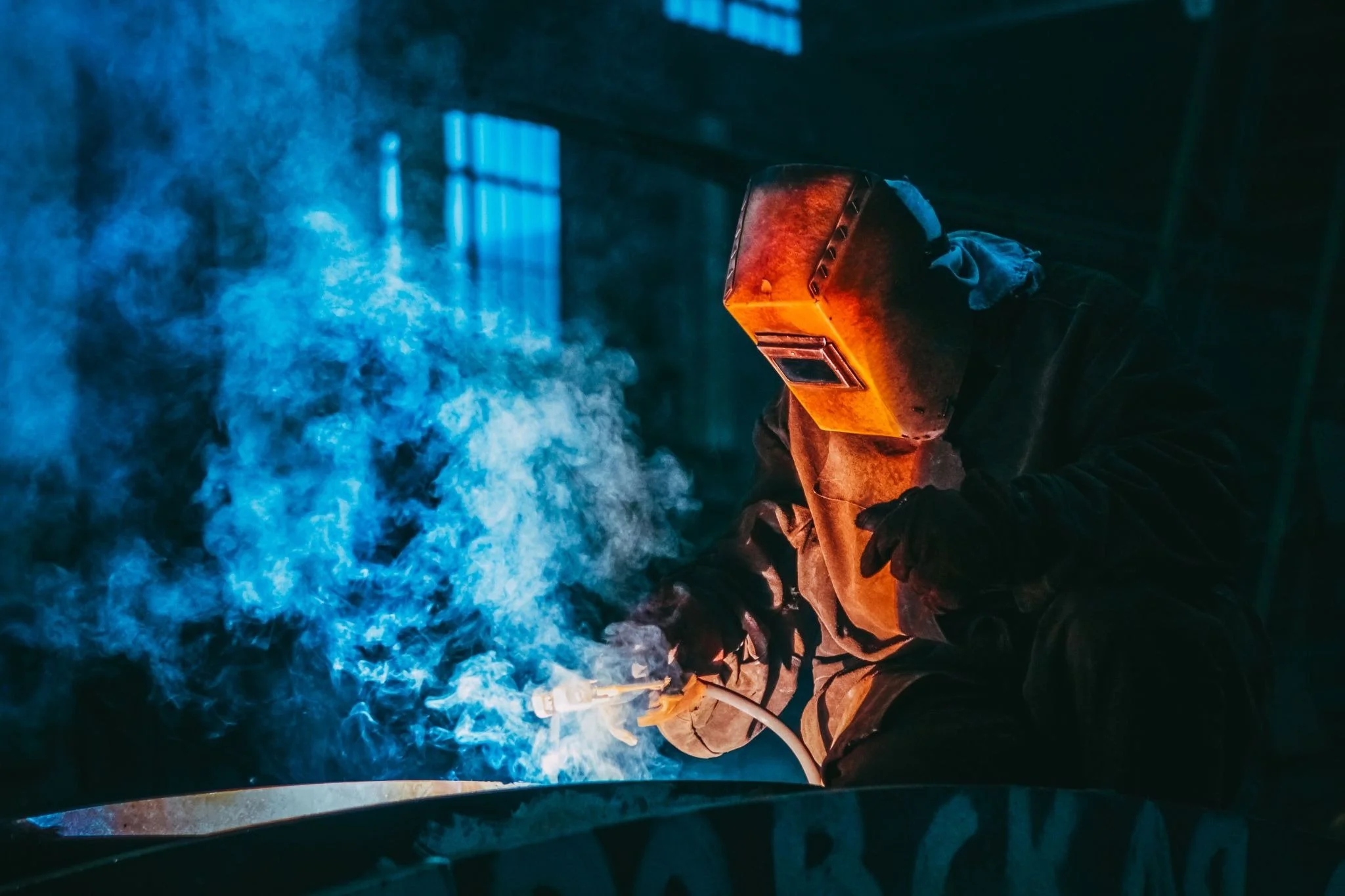
Once work begins, expect the welder to follow proper safety protocols, including fire prevention measures, ventilation, and protective equipment. Commercial welding generates intense heat, sparks, and fumes, so a professional approach to safety protects both the workers and your facility.
Quality Control and Inspection
After welds are completed, quality control measures confirm that the work meets specifications. This might include visual inspection, dimensional checks, and in some cases, non-destructive testing methods like dye penetrant inspection or ultrasonic testing. These steps catch any issues before they become problems.
For structural or safety-critical applications, you may need certified inspections from a third party. A reliable welding partner can coordinate with inspectors and provide all the documentation needed to satisfy regulatory requirements.
How Does Welding Fit Into Overall Facility Maintenance?
Welding is one piece of a broader facility maintenance strategy. Smart business owners look for providers who can address multiple facility needs, from commercial HVAC and electrical systems to specialized services like welding and fabrication. Working with a single trusted partner simplifies scheduling, billing, and coordination.
When your facility services provider knows your building, your equipment, and your operational priorities, they can identify opportunities to improve efficiency, prevent problems, and keep your operation running smoothly. That kind of relationship pays dividends over time.
Planning for Future Needs
A good welding partner doesn't just handle today's project. They help you think about future needs and plan accordingly. Maybe your facility is growing and will need additional structural support.
Maybe you're considering equipment upgrades that will require fabrication work. Having these conversations early helps you budget appropriately and avoid last-minute scrambles.
This kind of forward-thinking partnership is what separates a transactional vendor from a true service partner. The best providers invest in understanding your business and offering insights that go beyond the immediate job at hand.
Ready to Find the Right Welding Partner for Your Facility?
Commercial welding is a specialized service that can save your business money, reduce downtime, and solve problems that no other approach can address. Choosing the right partner means looking for certifications, experience, strong documentation, and a commitment to quality that matches your standards.
If you're looking for a commercial services provider that brings all of these qualities to every project, ACS Services is ready to help. Reach out through our contact page to discuss your welding needs and learn how our team can support your facility's success.
Frequently Asked Questions About Commercial Welding
What kinds of businesses use commercial welding services?
Commercial welding is useful for many types of facilities, including manufacturing plants, warehouses, office buildings, retail spaces, schools, healthcare facilities, and industrial sites. Any business with metal structures, equipment, supports, platforms, railings, racks, or custom components may need welding at some point.
The right welding service can help with repairs, fabrication, reinforcement, and modifications that keep your facility safer and more functional.
Is commercial welding better than replacing damaged equipment?
In many cases, welding can be a smart way to repair damaged equipment without paying for a full replacement. This is especially helpful when the equipment is expensive, hard to source, or no longer supported by the original manufacturer.
A professional welder can assess the damage and determine whether repair is the right choice. If the part is too worn, unsafe, or structurally compromised, replacement may be the better option.
How do I know if a weld repair is safe?
A safe weld repair starts with proper evaluation, the right welding method, quality materials, and experienced workmanship. For load-bearing or structural applications, the work may also need to meet certain codes or inspection requirements.
Documentation matters too. Clear reporting helps you understand what was repaired, what materials were used, and whether future follow-up is recommended.